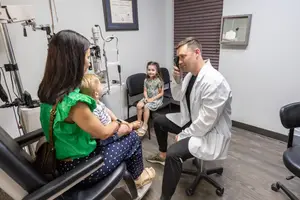
When a new school year begins, a child may suddenly mention that the board looks fuzzy. You might notice squinting at signs, a change in where they sit, or a teacher’s note that they move closer to see. These observations deserve attention, but school itself does not cause nearsightedness.
Myopia is the medical name for nearsightedness: close objects remain clearer than distant ones. It often develops during childhood and can change as children grow. Back-to-school routines simply offer more chances to notice how a child sees across a classroom. This guide separates what we know about inherited risk from lifestyle factors still being studied, and explains when an eye exam can help.